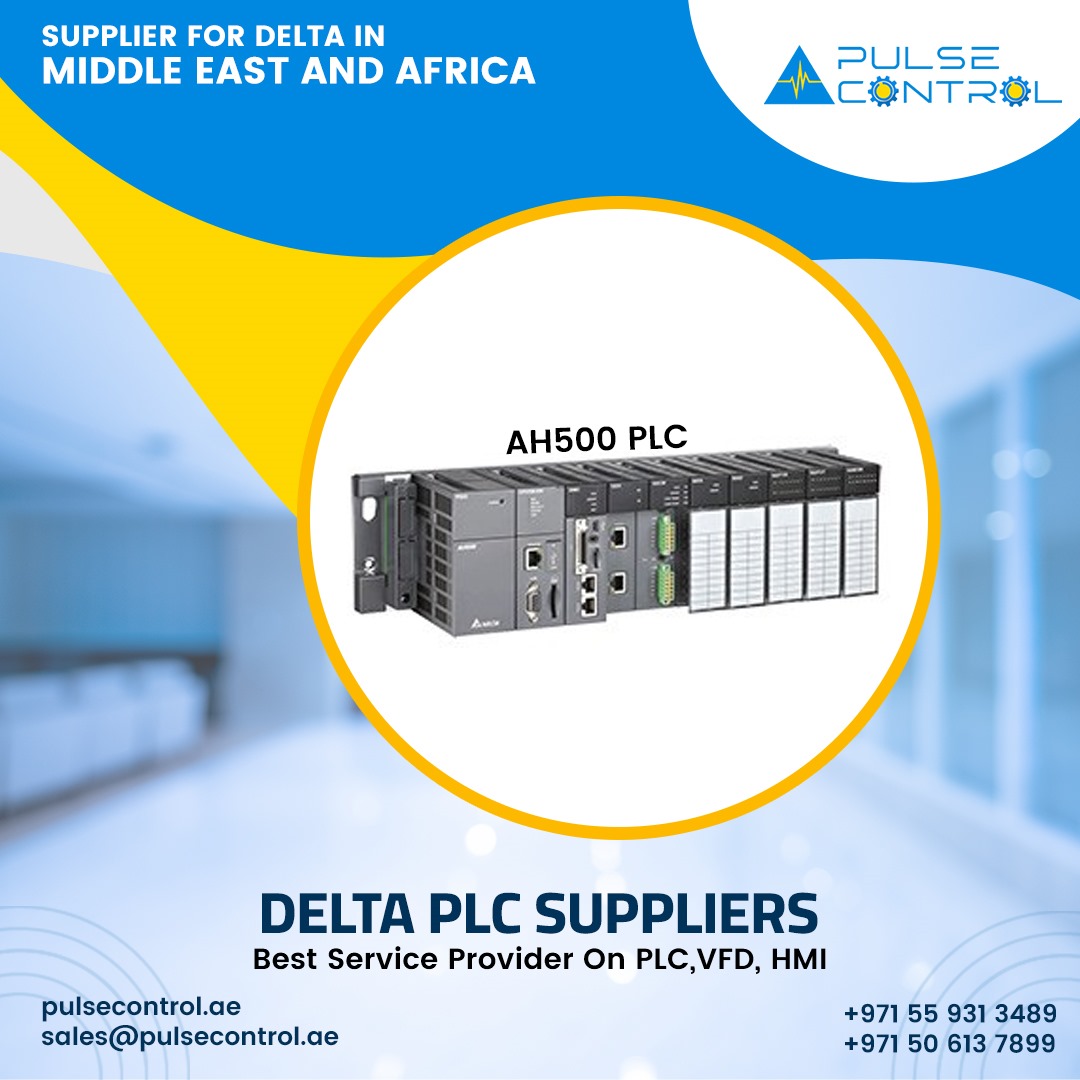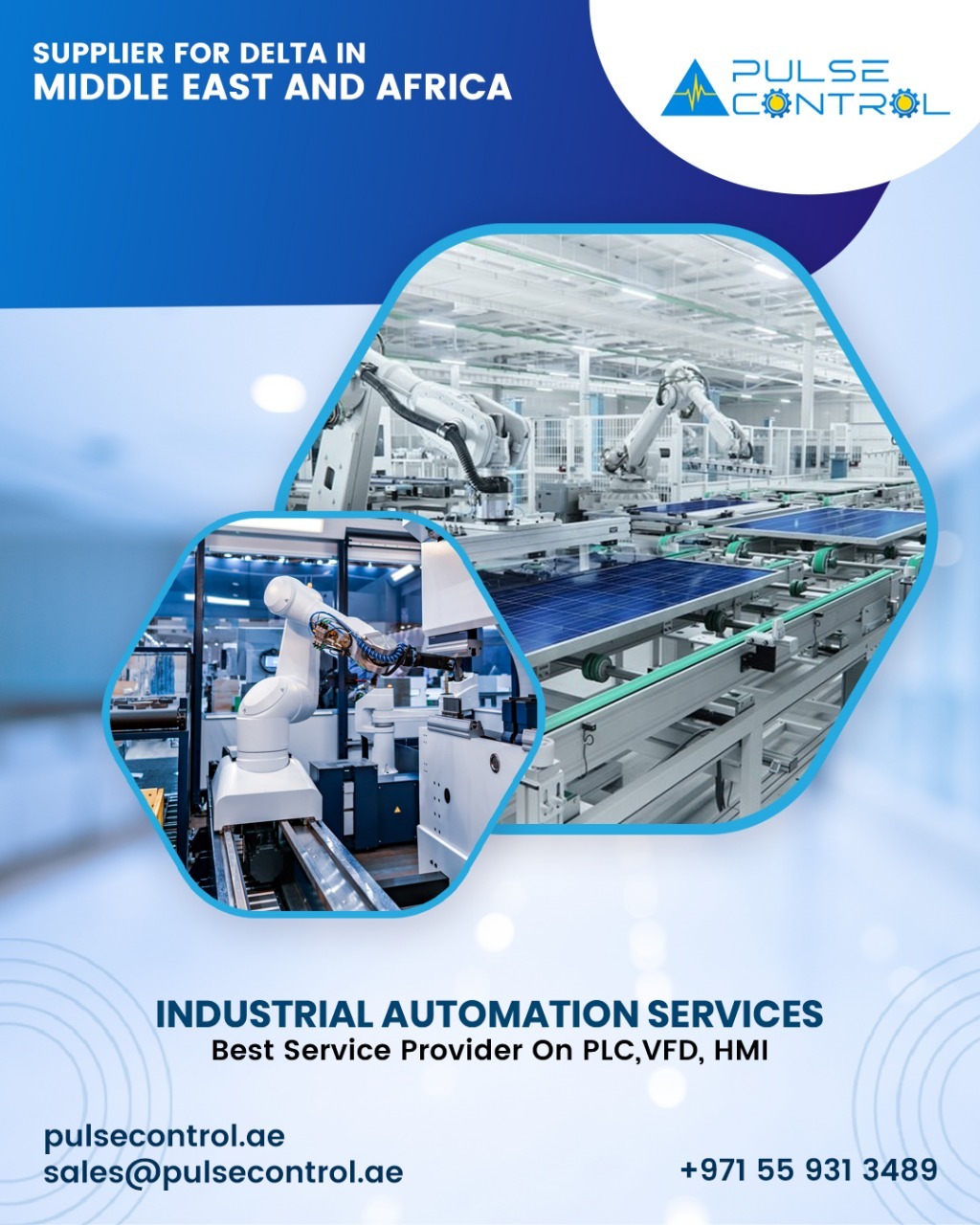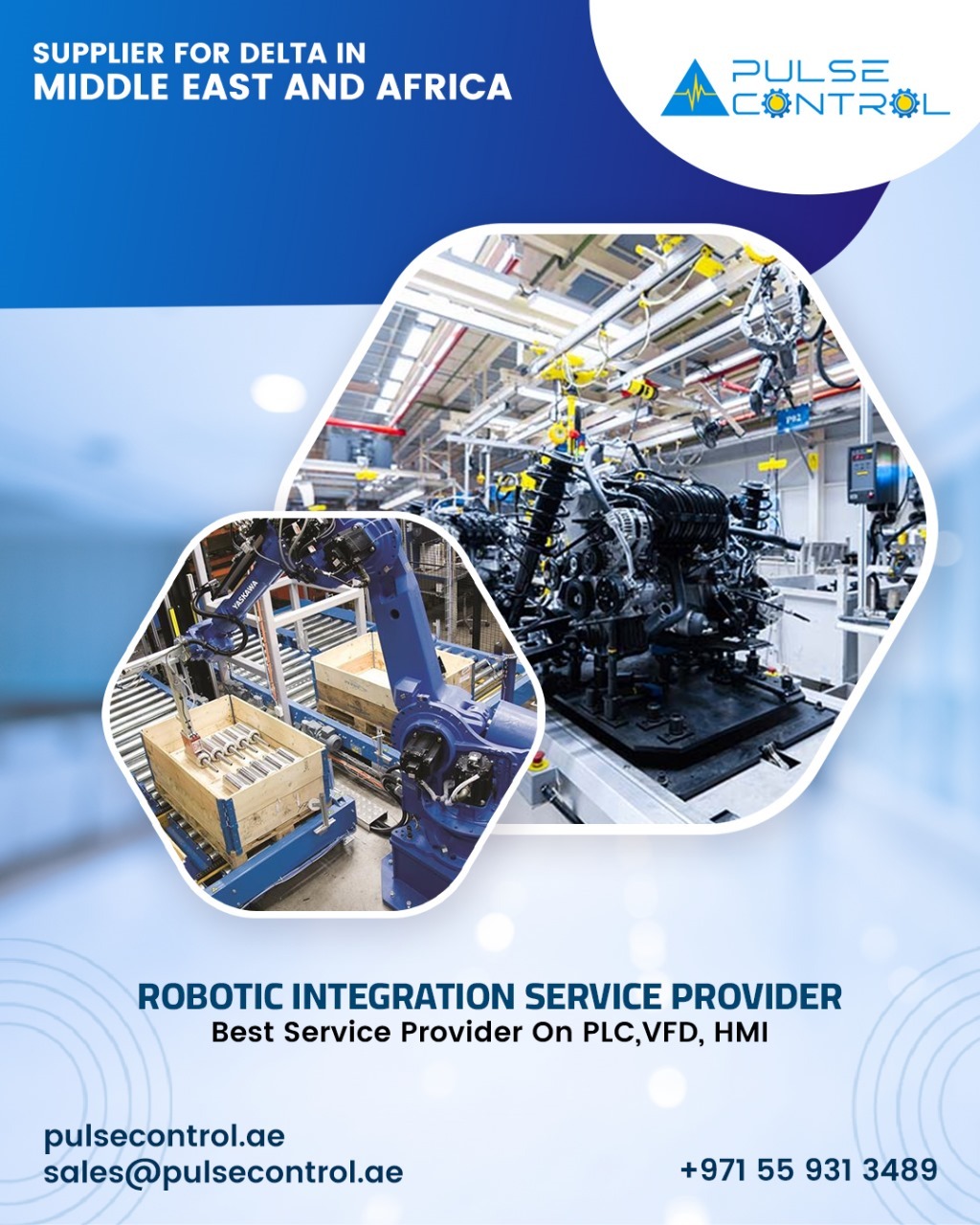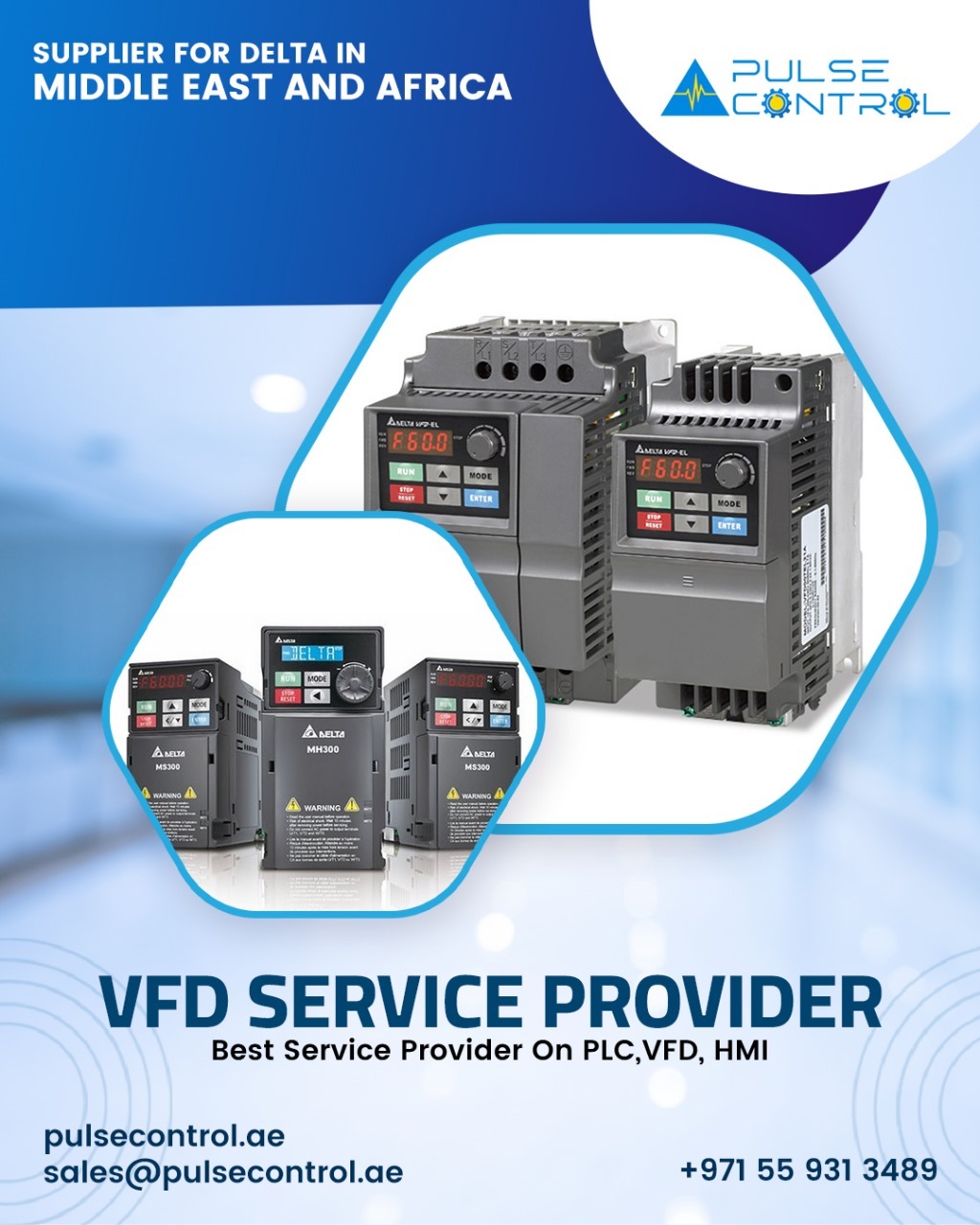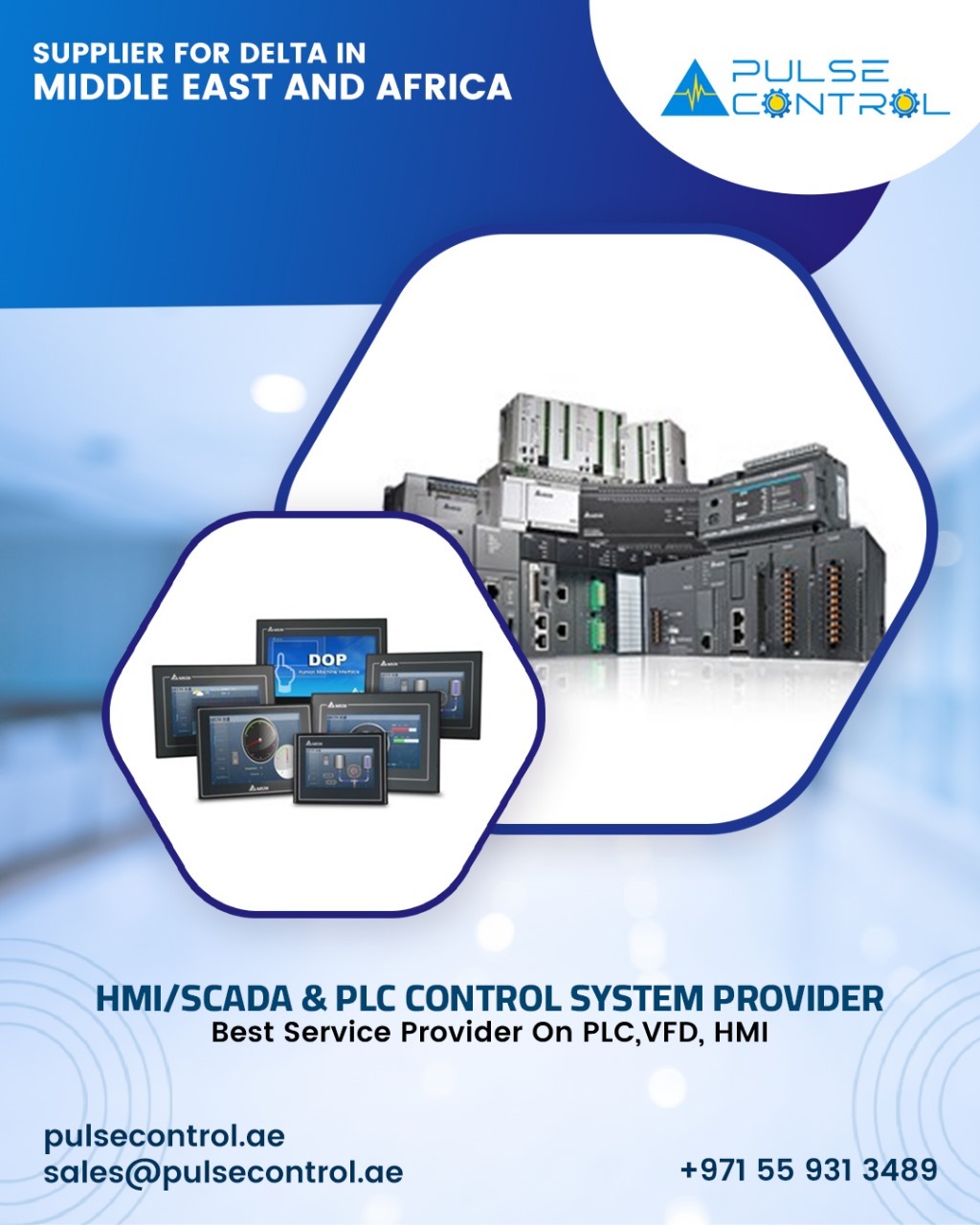
Pulse Control Industrial Equipment LLC is a trusted and reputable supplier of DELTA industrial automation products in the UAE, serving clients across various sectors such as manufacturing, energy, water treatment, HVAC, and more. As an authorized distributor, the company provides a full range of DELTA solutions including variable frequency drives (VFDs), programmable logic controllers (PLCs), human-machine interfaces (HMIs), servo systems, power supplies, and industrial control components.

Known for their high efficiency, advanced technology, and cost-effectiveness, DELTA products are widely used to improve productivity, reduce energy consumption, and automate critical processes in industrial environments. As a trusted DELTA dealer Dubai, Pulse Control ensures that customers receive genuine products backed by technical expertise and reliable after-sales support.

In addition to supplying top-quality equipment, Pulse Control Industrial Equipment LLC offers professional consultation, system integration assistance, and tailored automation solutions that meet the unique requirements of each project. With a strong presence in the UAE, the company has built a reputation for delivering timely services and maintaining a high standard of customer satisfaction.

Whether it’s a large-scale industrial plant or a small automation upgrade, clients can rely on Pulse Control to deliver innovative DELTA technologies with full technical support and training. Their deep understanding of automation trends and commitment to excellence make them a go-to partner for businesses looking to adopt or enhance smart industrial systems in the UAE.


Key Specialities of Pulse Control Industrial Equipment LLC – DELTA Supplier in UAE

  1. Genuine DELTA Products

    • Supplies 100% authentic DELTA automation and control systems with full technical assurance.

  2. Comprehensive Product Portfolio

    • Offers a wide range of DELTA devices including VFDs, PLCs, HMIs, Servo Drives, Power Supplies, and Industrial Control Components.

  3. Custom Automation Solutions

    • Designs tailor-made systems to meet specific automation needs across various industries.

  4. Expert Integration Services

    • Integrates DELTA systems seamlessly into existing or new industrial setups.

  5. Industry-Specific Expertise

    • Experienced in serving sectors like oil & gas, HVAC, manufacturing, water treatment, and more.

  6. On-Site Technical Support

    • Provides on-site installation, setup, testing, and troubleshooting by certified technicians.

  7. Efficient Project Consultation

    • Offers professional advice and planning support to ensure optimal equipment selection and system design.

  8. Training & Knowledge Transfer

    • Conducts product training and technical sessions to empower customer teams with hands-on knowledge.

  9. Quick Turnaround & Local Stock

    • Maintains ready stock and ensures fast delivery across all emirates in the UAE.

  10. Commitment to Quality & Reliability

  • Focused on delivering high-performance, durable, and energy-efficient solutions with a long service life.

🌟 Need for DELTA Products

In today’s fast-paced industrial environment, the demand for automation, efficiency, and precision has never been greater. This is where DELTA products play a crucial role. Industries require smart systems that reduce manual labor, minimize errors, and ensure consistent performance—DELTA’s automation solutions are built for exactly that.

Whether it’s a production line that needs constant speed regulation or a process that demands real-time data monitoring, DELTA provides reliable and energy-efficient products to meet these needs. From reducing operational costs to enhancing safety and system reliability, DELTA products have become a core component in building modern, intelligent industrial infrastructure.


⚙️ Uses of DELTA Products

DELTA products are used across a wide range of industries for various applications. Variable Frequency Drives (VFDs) are commonly used to control motors in pumps, fans, conveyors, and HVAC systems, helping save energy and extend equipment life. Programmable Logic Controllers (PLCs) manage and automate complex processes in manufacturing plants, ensuring consistent and accurate performance.

Human Machine Interfaces (HMIs) offer intuitive touchscreen control, allowing operators to interact with machines efficiently. For high-speed, high-precision tasks, servo drives and motors are used in robotics, packaging, and CNC machinery. Additionally, DELTA provides power supplies, SCADA systems, and temperature controllers that are widely used in energy, water treatment, food processing, and pharmaceutical industries. With such versatile applications, DELTA products are an essential part of any smart industrial setup.

🔍 Relevance of DELTA Products

The relevance of DELTA products in the current era of industrial automation and smart manufacturing is highly significant. As industries across the globe shift toward digitization and intelligent systems, DELTA stands out as a reliable brand offering cost-effective, high-performance automation solutions.

From simple motor control to complex process automation, DELTA’s wide range of products—such as VFDs, PLCs, HMIs, servo drives, and SCADA systems—meet the evolving needs of various sectors including manufacturing, infrastructure, water management, energy, and HVAC. Their solutions enable real-time monitoring, increased energy efficiency, better precision, and remote control capabilities, which are essential for modern industry operations.

Moreover, DELTA’s continued innovation in green technology and IoT integration ensures that its products remain future-ready, aligning perfectly with the global push toward sustainability, digital transformation, and Industry 4.0. In short, DELTA is not just relevant—it is critical to the modernization and optimization of industrial systems worldwide.

What Delta products does Pulse Control supply in the UAE?

Pulse Control supplies a wide range of Delta products including PLCs, HMIs, VFDs, servo motors, drives, power supplies, and industrial automation solutions.

What Services Are Provided by a DELTA Supplier in UAE?

Service TypeDescriptionKey Benefits
Delta Product SupplySupply of Delta PLC, HMI, VFD, and automation componentsHigh quality, reliable performance
System IntegrationIntegration of Delta systems into industrial automation processesSeamless operation, improved efficiency
Technical SupportInstallation, troubleshooting, and maintenance servicesReduced downtime, expert assistance

Pulse Control is a trusted DELTA supplier UAE, providing high-quality Delta automation products for industrial applications. As a reliable DELTA dealer UAE, we offer a wide range of solutions including PLC, HMI, and VFD systems designed for efficient performance. We are also recognized as a leading DELTA dealer Dubai, delivering expert support, genuine products, and seamless integration for various automation needs.DELTA supplier UAE DELTA dealer UAE DELTA dealer Abu Dhabi DELTA dealer Dubai DELTA dealer Sharjah DELTA dealer Ajman DELTA dealer Umm Al Quwain DELTA dealer Ras Al Khaimah DELTA dealer Fujairah DELTA supplier UAE DELTA supplier Abu Dhabi DELTA supplier Dubai DELTA supplier Sharjah DELTA supplier Ajman DELTA supplier Umm Al Quwain DELTA supplier Ras Al Khaimah DELTA supplier Fujairah ⚙️ What is Industrial Automation? Industrial automation refers to the use of advanced technologies, control systems, and equipment—such as computers, sensors, robotics, and programmable logic controllers (PLCs)—to automate industrial processes and machinery with minimal human intervention. It plays a vital role in enhancing production efficiency, improving product reducing operational costs, and increasing workplace safety. Through automation, repetitive tasks, such as assembly, packaging, material handling, and inspection, are carried out with precision and consistency. This allows industries to operate faster, more reliably, and around the clock. With the integration of Industrial Internet of Things (IIoT), Artificial Intelligence (AI), and real-time data analytics, modern industrial automation also supports smarter decision-making and predictive maintenance. Sectors like manufacturing, oil & gas, pharmaceuticals, automotive, and food processing heavily rely on automation systems to stay competitive in a fast-evolving global market.industrial automation is the backbone of Industry 4.0, leading the way to intelligent, connected, and highly efficient industrial operations. DELTA supplier UAE DELTA supplier UAE DELTA supplier UAE DELTA supplier UAE DELTA supplier UAE DELTA supplier UAE DELTA supplier UAE DELTA supplier UAE DELTA supplier UAE DELTA supplier UAE DELTA supplier UAE DELTA supplier UAE DELTA supplier UAE DELTA supplier UAE DELTA supplier UAE DELTA supplier UAE DELTA supplier UAE DELTA supplier UAE DELTA supplier UAE DELTA supplier UAE DELTA supplier UAE DELTA supplier UAE DELTA supplier UAE DELTA supplier UAE DELTA supplier UAE DELTA supplier UAE DELTA supplier UAE DELTA supplier UAE DELTA supplier UAE DELTA supplier UAE DELTA supplier UAE DELTA supplier UAE DELTA supplier UAE DELTA supplier UAE DELTA supplier UAE DELTA supplier UAE DELTA supplier UAE DELTA supplier UAE DELTA supplier UAE DELTA supplier UAE DELTA supplier UAE DELTA supplier UAE DELTA supplier UAE 🖥️ DELTA HMI (Human Machine Interface) DELTA HMI is a user-friendly interface device that allows operators to interact with machines and automated systems in industrial environments. Acting as a bridge between humans and machines, DELTA HMIs provide real-time data visualization, control functions, and system monitoring through intuitive touchscreens and graphical displays. These interfaces are widely used across industries like manufacturing, food processing, energy, packaging, and water treatment to enhance operational control and efficiency. DELTA offers a variety of HMI models with different screen sizes, communication protocols (such as Modbus, Ethernet/IP, and CANopen), and advanced features like remote monitoring, alarm management, multi-language support, and data logging. Their HMIs are designed for easy integration with DELTA PLCs, VFDs, and other automation components, making them ideal for centralized control panels or decentralized machine interfaces. With a focus on durability, customization, and high-resolution display, DELTA HMIs empower users to monitor processes, make quick adjustments, and optimize system performance—ultimately contributing to smarter, safer, and more productive industrial operation ⚡ DELTA Inverters DELTA Inverters are high-performance power conversion devices used to control the speed and torque of electric motors by adjusting the frequency and voltage of the power supply. Commonly referred to as Variable Frequency Drives (VFDs), DELTA inverters are essential components in modern automation systems, offering precise motor control, energy efficiency, and reduced mechanical stress on equipment. These inverters are used across a variety of industries including HVAC, textiles, packaging, water treatment, elevators, and manufacturing to improve productivity and extend the lifespan of motors. DELTA offers a wide range of inverter series—from compact models for small machinery to high-power inverters for large industrial systems—equipped with advanced features such as sensorless vector control, PID control, torque boost, multi-motor control, and built-in communication protocols like Modbus, CANopen, and Ethernet/IP. Their user-friendly interface, rugged design, and reliable performance under harsh conditions make DELTA inverters a preferred choice for engineers and automation specialists seeking cost-effective and sustainable motor control solutions. ⚡ DELTA Inverters DELTA Inverters are high-performance power conversion devices used to control the speed and torque of electric motors by adjusting the frequency and voltage of the power supply. Commonly referred to as Variable Frequency Drives (VFDs), DELTA inverters are essential components in modern automation systems, offering precise motor control, energy efficiency, and reduced mechanical stress on equipment. These inverters are used across a variety of industries including HVAC, textiles, packaging, water treatment, elevators, and manufacturing to improve productivity and extend the lifespan of motors. e and sustainable motor Would you like a version comparing DELTA inverters to other brands o Sure! Here's a comprehensive paragraph explaining VFD (Variable Frequency Drive): ⚙️ What is a VFD (Variable Frequency Drive)? A Variable Frequency Drive (VFD) is an electronic device that controls the speed and torque of an electric motor by varying the frequency and voltage of the power supplied to it. VFDs are essential in modern industrial automation and energy management systems, as they allow motors to run only at the speed needed for a specific task—rather than full speed—resulting in significant energy savings, reduced wear and tear, and improved process control. Commonly used in HVAC systems, water pumps, conveyors, fans, compressors, and manufacturing machinery, VFDs help enhance equipment lifespan and reduce maintenance costs. They also provide soft-start capabilities, which eliminate sudden surges in power and mechanical stress during motor startup. In advanced systems, VFDs are integrated with PLCs, sensors, and HMIs for precise and automated motor control. Whether in commercial buildings or industrial plants, VFDs play a key role in creating efficient, flexible, and environmentally-friendly operations. Let me know if you'd like this broken into point form or focused on a specific industry like HVAC, water treatment, or manufacturin Sure! Here's a clear and informative paragraph about HMI (Human Machine Interface): 🖥️ What is an HMI (Human Machine Interface)? A Human Machine Interface (HMI) is a user-friendly control panel or screen that allows humans to interact with machines, systems, or processes in industrial and commercial environments. HMIs display real-time data from sensors, PLCs, or control systems, enabling operators to monitor operations, adjust settings, respond to alarms, and visualize performance metrics through an intuitive graphical interface. Commonly used in industries such as manufacturing, energy, water treatment, food processing, and packaging, HMIs are essential for efficient and safe operation. They can range from simple monochrome panels to advanced color touchscreen displays with multi-language support, data logging, remote access, and advanced control features. HMIs are often integrated with automation systems to provide seamless communication between equipment and users, enhancing productivity and reducing downtime. In today’s Industry 4.0 environment, modern HMIs also support IoT connectivity and cloud integration, making them a vital part of smart and connected industrial systems. Would you like a point-wise version or one focused on a specific HMI brand like DELTA 🔋 What is a System Inverter? A System Inverter is a key component in electrical and energy systems that converts direct current (DC) into alternating current (AC) to power electrical devices, equipment, or entire systems. Commonly used in solar power setups, backup power systems, and industrial applications, system inverters play a crucial role in making energy from batteries or renewable sources usable for standard AC-powered equipment. In industrial automation, inverters—often referred to as Variable Frequency Drives (VFDs)—are used as part of a system to control motor speed, improve process control, and reduce energy consumption. In solar energy systems, inverters ensure that electricity generated by solar panels is efficiently converted and synchronized with the utility grid or used directly to power equipment. Advanced system inverters come equipped with features like remote monitoring, grid-tie compatibility, power factor correction, and overload protection. Whether used in a factory, a commercial building, or a solar farm, system inverters are essential for energy conversion, control, and optimization, making them an integral part of modern power infrastructure. : 🔧 Relevance of System Inverters In today’s energy-conscious and automation-driven world, system inverters have become a crucial part of modern infrastructure. Their relevance lies in their ability to bridge the gap between power generation sources (like solar panels or batteries) and the operational requirements of machinery or the electrical grid. Inverters enable the conversion of DC (Direct Current) into usable AC (Alternating Current), which is the standard form of electricity used in homes, industries, and commercial systems. With the global shift toward renewable energy and sustainable practices, system inverters are central to solar and hybrid energy systems—allowing clean power to be harnessed efficiently and fed into existing electrical setups. In industrial automation, inverters serve a dual role: they not only convert power but also precisely control the speed and torque of motors, which enhances energy savings, productivity, and equipment longevity. As industries and utility providers strive for smarter, greener solutions, the relevance of system inverters continues to grow—especially with modern features like IoT connectivity, grid synchronization, load management, and fault protection. ⚙️ Uses of System Inverters System inverters are widely used across various industries and energy systems due to their versatile functionality. In the renewable energy sector, they are the heart of solar photovoltaic systems, converting the DC power generated by solar panels into AC power for use in homes, businesses, or the utility grid. Grid-tie inverters also ensure synchronization with grid frequency and voltage, allowing for safe and efficient power transfer. In the industrial sector, system inverters—particularly VFDs (Variable Frequency Drives)—are used to control motor-driven equipment such as conveyors, fans, pumps, compressors, and CNC machines. This not only improves operational efficiency but also significantly reduces electricity consumption and mechanical wear. Additionally, system inverters are used in backup power systems like UPS (Uninterruptible Power Supplies) to maintain uninterrupted power flow during outages. Their intelligent features, such as programmable control, remote monitoring, and energy management capabilities, make them indispensable for smart factories, energy-efficient buildings, and off-grid power setups. Overall, system inverters are key to modernizing energy use and industrial performance across the globe. Control Panel for Conveyor Systems A control panel for a conveyor system is a centralized unit that manages and automates the operation of conveyors used in various industries such as manufacturing, packaging, warehousing, food processing, and logistics. These panels are designed to control the movement, speed, direction, and safety functions of the conveyor based on the specific needs of the application. Equipped with components like programmable logic controllers (PLCs), variable frequency drives (VFDs), motor starters, relays, overload protectors, sensors, push buttons, emergency stop switches, and human-machine interfaces (HMIs), the control panel ensures efficient and precise operation of the conveyor. Through the use of PLCs and VFDs, operators can adjust the speed of the belts or rollers, reverse the flow direction, control start/stop sequences, and coordinate multiple conveyor lines from a single point. Advanced control panels also support real-time monitoring, fault diagnostics, and remote access, which enhances production efficiency, reduces downtime, and ensures worker safety. Integration with other automation systems allows for seamless communication between the conveyor and packaging machines, robotic arms, or sorting stations. In high-speed or automated environments, a control panel becomes the "brain" of the conveyor system, enabling it to adapt to changing workloads, maintain consistent product flow, and meet the demands of modern industry operations. Function of a Conveyor Control Panel A control panel for a conveyor system serves as the operational hub that regulates and automates every function of the conveyor. Its primary role is to manage the starting, stopping, and speed control of motors that drive the conveyor belts or rollers. This includes controlling the direction of movement (forward or reverse), adjusting the speed depending on the process requirements, and ensuring synchronization with other machines in the production line. The panel processes input signals from sensors and user interfaces, and in return, sends command signals to the conveyor motors and actuators. This ensures that material flows consistently and smoothly throughout the system. Whether it’s a basic on/off control or a complex sequence of operations managed via a PLC, the control panel plays a critical role in optimizing the performance and minimizing manual intervention. 2️⃣ Key Components of a Conveyor Control Panel The efficiency and intelligence of a conveyor control panel come from its internal components. A typical panel houses Variable Frequency Drives (VFDs) to regulate motor speed, PLCs (Programmable Logic Controllers) for logic-based decision making, and contactors and relays for switching. It also includes circuit breakers and overload protection to ensure electrical safety, emergency stop systems to quickly halt operations in dangerous situations, and sensors like proximity switches and photo-eyes to detect product position or presence. A Human Machine Interface (HMI) may be included for easy interaction, displaying system status, faults, and controls on a touchscreen. For more advanced systems, the panel might also include network communication modules that connect to SCADA or building management systems for centralized control and remote monitoring. Each component works together to ensure the conveyor system operates safely, smoothly, and efficiently. 3️⃣ Importance in Industrial Automation In modern industrial environments, a conveyor system without an intelligent control panel would be inefficient, unsafe, and inflexible. The control panel automates repetitive tasks, reducing reliance on manual labor and human error. It ensures precise timing and coordination, which is essential in fast-paced production lines like packaging, bottling, or assembly processes. Automation through control panels also supports predictive maintenance—monitoring motor loads, wear patterns, and potential issues before they lead to downtime. Furthermore, by integrating safety features like emergency stops, light curtains, and overload detection, the control panel helps protect workers and equipment. In today’s competitive industrial landscape, having a smart and responsive conveyor control system isn't just a convenience—it's a necessity for ensuring productivity, consistency, and compliance with safety standards. 4️⃣ Applications Across Industries Conveyor control panels are used in a wide range of industries, each with unique requirements. In the food and beverage industry, they are used to manage conveyors that transport items through washing, cooking, packaging, and labeling stations—often requiring hygiene-compliant and waterproof enclosures. In logistics and warehousing, control panels help sort packages, route items efficiently, and manage high-speed automated conveyors. Pharmaceutical companies rely on them for precision and cleanliness, often requiring integration with cleanroom-compliant equipment. In mining and heavy industries, control panels handle rugged, high-torque conveyors that operate in harsh environments. Each application may demand custom programming, material-specific sensors, or integration with barcode scanners, metal detectors, and robotic pickers. Regardless of the industry, the conveyor control panel is the heart of the material handling process. 5️⃣ Benefits and Future Potential A well-designed conveyor control panel offers numerous benefits—from increased energy efficiency and reduced downtime to enhanced safety and scalability. VFDs help lower power usage by adjusting motor speed based on load, while HMIs and PLCs offer detailed insights and control over the entire system. Maintenance teams can detect and solve issues faster through built-in alarms and real-time diagnostics. Additionally, with Industry 4.0 and IoT integration, modern control panels can connect to cloud platforms for advanced analytics, remote support, and AI-driven optimizations. The future of conveyor systems lies in smart automation, where control panels not only manage mechanical tasks but also gather data, learn from performance trends, and adapt to changes automatically. Investing in a robust control panel ensures long-term reliability, reduced operational costs, and a system that's ready for the next generation of automation.

About Us

Our services include Detail Engineering solutions, Machine Automation, Process Automation, Control Panel Design & Assembly, PLC Programming, VFD Installation & Commissioning, Energy Monitoring Solutions, Products Supply and support on industry leading brands.

Networks

Products

  • Programmable Logic Controller
  • Variable Frequency Drive
  • Servo Motor & Drive
  • Motion Controller
  • Scada
  • More...

Services

  • Level Monitoring System
  • Pneumatic & Hydraulics
  • Industrial Automation
  • Control Panel Designing
  • Wiring Solutions
  • More...

Our Address

Pulse Control Industrial
Equipment’s Trading LLC
Al Qusais Industrial Area-1,
Dubai-UAE.
Tel.: +971-55-9313489
+971-55-9520689
Email :  sales@pulsecontrol.ae , service@pulsecontrol.ae

© 2022 Welcome to Pulse Control. All rights reserved

Privacy Preference Center